
Energy Sharing means sharing electricity from your PV system with other consumers in your region via the public grid. Since 1 June 2026, grid operators have been required to enable this. For small and medium-sized businesses, it is a new option between self-consumption and feed-in, although the economic lever is smaller than many expect.
ENERGY SHARING · SECTION 42c EnWG
Energy Sharing: sharing solar power with a neighboring business – what is permitted and what it delivers
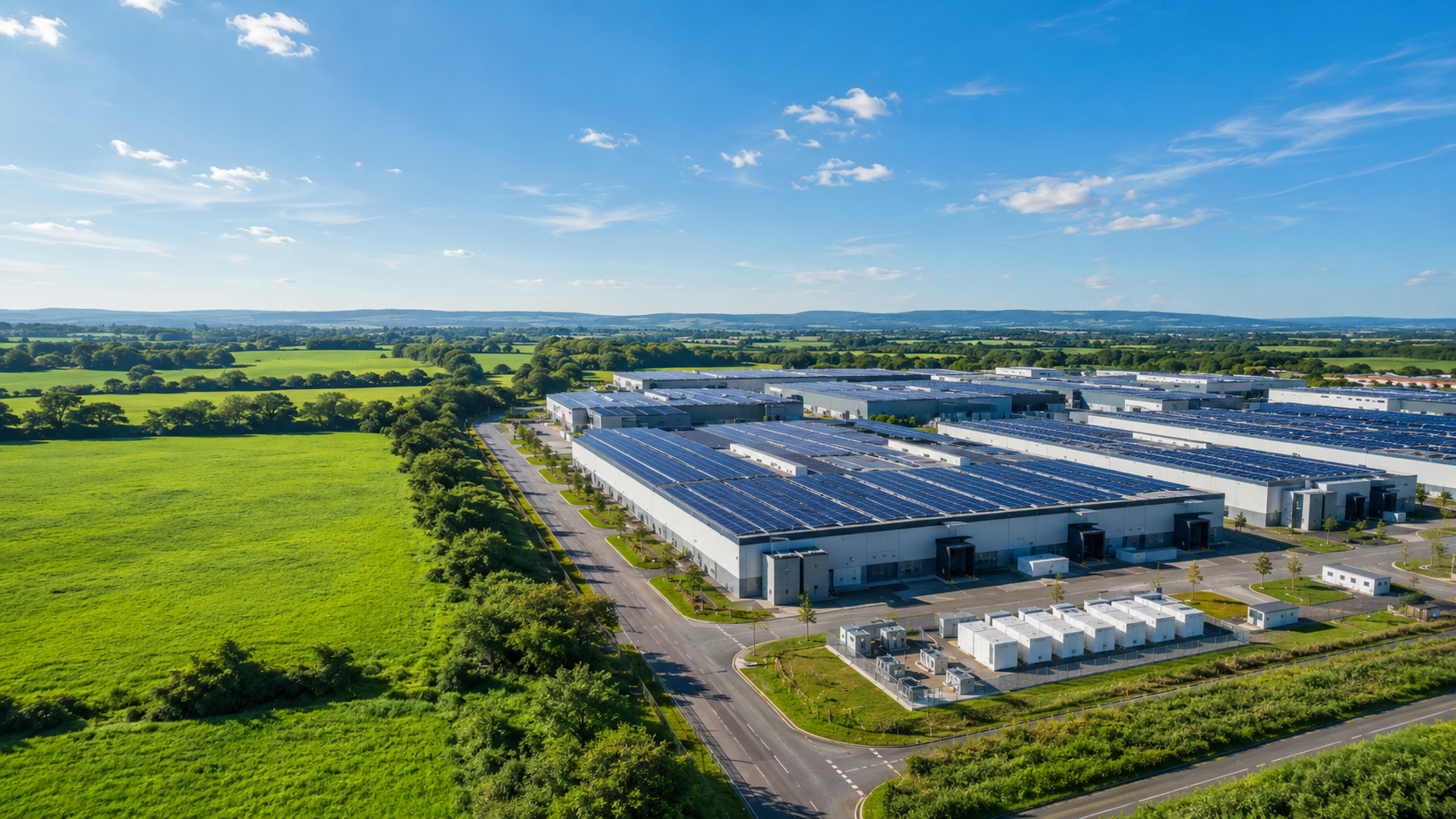
Since 1 June 2026, distribution system operators have been required to enable the shared use of electricity from renewable energy systems (Section 42c EnWG). One system can supply several consumption points, which are billed as a shared arrangement. The electricity flows through the public grid. This does not reduce grid fees, levies or other charges. We assess whether Energy Sharing fits your project and support implementation.
Who can participate
The system may be operated by parties whose activity is not predominantly commercial or self-employed professional activity. For companies and associations, all shareholders or members must be final consumers or public-law legal entities. Businesses are eligible only if they are micro, small or medium-sized enterprises. Large companies are excluded. Typical participants include small and medium-sized businesses, municipalities, cooperatives and households.
Whether a specific setup qualifies as “not predominantly commercial” depends on the individual case and has not yet been conclusively clarified in practice. We assess this with you and recommend legal review where uncertainty remains.
How it differs from other models
- Self-consumption: generator and consumer are the same party.
- Tenant electricity (Section 42a EnWG): supply to tenants within the building.
- Shared building supply (Section 42b EnWG): supply within a building.
- Energy Sharing (Section 42c EnWG): shared use via the public grid within a defined area.
- On-site PPA: supply contract with a system on your premises; see Electricity Trading & Renewable PPA.
Requirements
- The system and all supplied consumption points must be located in the same area. From 1 June 2026, this means the balancing area of the distribution system operator; from 1 June 2028, it additionally includes the area of a directly adjacent distribution system operator within the same control area.
- In addition to the electricity supply contract, a shared-use agreement containing the statutory minimum terms is required.
- Electricity consumption and generation must be recorded using interval meter readings or 15-minute demand metering.
- Storage systems may temporarily store only electricity from renewable sources and must meet the EEG requirements for storage.
How electricity is allocated
Allocation takes place in every 15-minute interval. If the system generates 25 kWh while participants consume 30 kWh, 25 kWh are allocated to shared use and 5 kWh are supplied under the normal electricity contract. An allocation key determines how generation is distributed among participants: statically using fixed shares, dynamically according to current consumption, or using a hybrid model. This allocation method must be specified in the contract.
Roles and technology
Operators, participants and grid operators have different obligations. A service provider can handle billing, data exchange and contract administration so participants do not have to manage these tasks themselves. This includes the system, metering, data platform and billing. Metering is often the bottleneck: the required metering systems must be available, and smart metering systems are still being installed slowly in many regions. This should be clarified early. See Metering & Control.
Use cases
- Commercial area: businesses share electricity from a common system.
- Municipality: a system on a public building supplies municipal facilities and local businesses.
- Agriculture: one farm generates electricity and neighboring users consume it.
- Cooperative: members jointly support and use the system.
Where large companies are intended to participate, Energy Sharing is not applicable. In that case, self-consumption, an on-site PPA or direct marketing may be suitable; see Self-Consumption Optimization and Direct Marketing.
Economic viability
Teilnehmer beziehen Strom aus der Anlage zu einem vereinbarten Preis, der unter dem üblichen Bezugspreis liegen kann. Netzentgelte, Umlagen und Abgaben bleiben bestehen, weil der Strom das öffentliche Netz nutzt. Der Vorteil entsteht aus günstiger Erzeugung, nicht aus Entlastungen. Ein Speicher oder ein Energiemanagement erhöht den Anteil der gemeinsam genutzten Menge, siehe Batteriespeicher und Intelligentes Energiemanagement. Wir rechnen die Economic viability für Ihr Modell, siehe Economic viabilitysanalyse.
Typical mistakes
- Participant group not checked for eligibility
- Allocation key unclear
- Metering concept planned too late
- Assumed entitlement to grid-fee reductions that do not exist
- Contractual and information obligations underestimated
- System output and consumption profile not aligned
Frequently asked questions
What is Energy Sharing?
The shared use of electricity from a renewable energy system by several consumption points via the public grid, governed by Section 42c EnWG.
Who can participate?
Households, municipalities, cooperatives and micro, small and medium-sized enterprises. Large companies are excluded. The system may not be operated predominantly for commercial purposes.
Are there reductions in grid fees?
No. The electricity is delivered via the public grid, so grid fees, levies and other charges apply.
How far apart may the system and consumers be?
Initially within the balancing area of the same distribution system operator; from 1 June 2028 also within the area of a directly adjacent distribution system operator in the same control area.
What metering is required?
Interval meter readings or 15-minute demand metering at each participating consumption point and at the generation system.
Initial consultation
We assess together whether Energy Sharing is suitable for your project. Get in touch with us.